
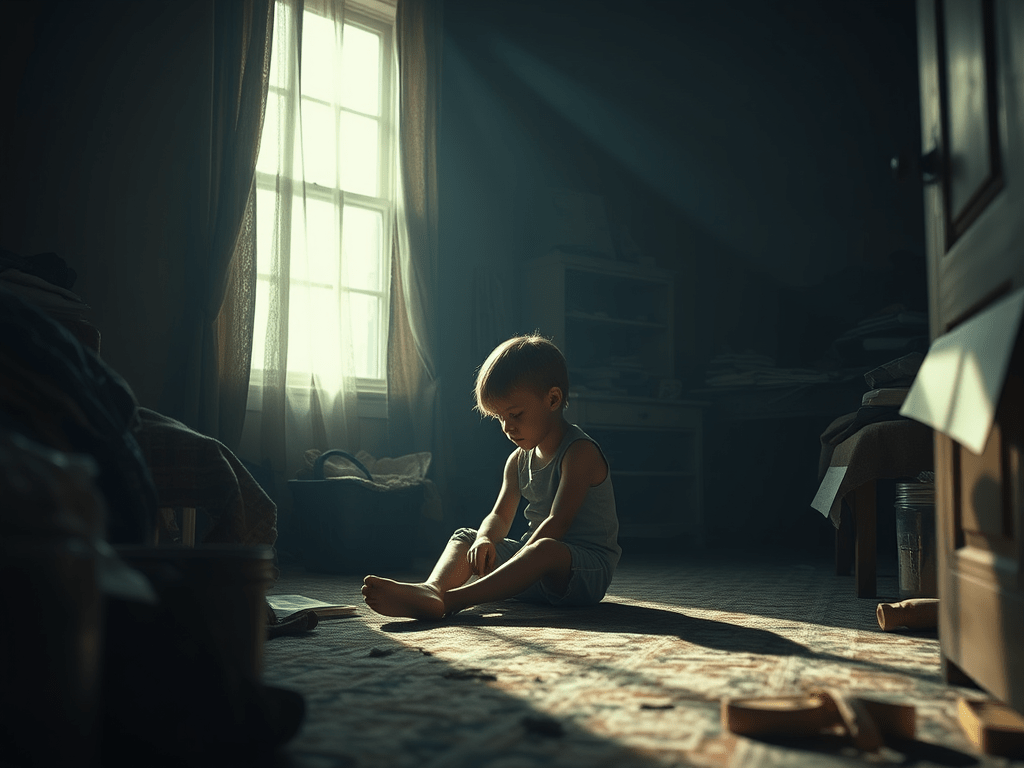

“Some scars aren’t visible — they live in silence, in hesitation, in fear of being misunderstood.”
The sound of a slammed door. The silence that follows.
The way your body learns to flinch before your mind catches up. Talking about childhood trauma is never easy — but it’s necessary.
Most articles define trauma. But this post isn’t about definitions. It’s about lived experiences — especially the kind that hide behind smiles, independence, or quietness in adulthood.
The Invisible Scars We Carry
You might look at someone and think they had a normal childhood.
They went to school. They laughed with friends. They got good grades.
But behind closed doors, many of us were learning how to survive emotionally unsafe environments — where love came with yelling, and “home” never felt peaceful.
This is the reality of childhood trauma: it doesn’t always look dramatic from the outside, but it leaves invisible scars on the inside.
Why Love Feels Unsafe
You’ve heard people say:
“I don’t believe in love.”
“I’m scared of relationships.”
“I don’t want to get married.”
It’s easy to label them as distant or guarded.
But often, it’s childhood trauma speaking.
When you grow up watching love come with shouting, silence, control, or coldness, you don’t feel safe in romantic spaces.
You don’t trust that love can be calm — because calm never lasted in your home.
Marriage feels like something that could explode at any time.
Childhood Trauma Feels Like Living in a War Zone
Imagine living in a war zone.
You don’t know when the next bomb will fall, so you stay alert.
You learn to decode footsteps. You become fluent in the rhythm of tension.
That’s what childhood trauma feels like.
It rewires your brain.
It teaches you that safety is temporary.
It turns you into your own protector before you even understand the word “trauma.”
Even when peace arrives, it feels suspicious. You don’t relax — you wait for it to be taken away.
If you’re looking for a deeper understanding of how childhood trauma affects the brain and emotional development, this article by Positive Psychology provides excellent research-backed insights.
A Glimpse Into My Own Childhood Trauma
When I was a child, my parents fought every single day — 365 days a year.
Even now, they still fight multiple times a week. And sadly, I consider that progress.
I rarely talk about it myself, but my mother does.
And when I seem anxious or emotionally distant, doctors often say:
“Parents fight. You don’t have to pay attention to it.”
That advice cuts deep.
Because while my parents fought, I was raising myself — emotionally, mentally, and silently.
I didn’t have a calm adult to run to. So I ran into my mind.
I created peaceful stories. I imagined safety. I daydreamed not for fun — but for survival.
I talk more about this quiet escape in my blog Joy of Daydreaming, where imagination became my safe place.
That’s not weakness.
That’s how I survived childhood trauma.
So when someone tells me to “just ignore it,” it feels like they’re erasing everything I endured just to become whole.
To Everyone Who Survived Childhood Trauma
If you grew up in chaos, let this be your reminder:
- You didn’t grow up too fast — you adapted faster than anyone should have to.
- Your independence isn’t coldness — it’s the warmth you had to give yourself.
- Your fear of conflict doesn’t make you fragile — it makes you aware.
You stitched peace together from fragments.
You built safety from silence.
That’s not weakness — that’s artistry.
You are not broken.
You are the result of everything you did to protect yourself.
If all you want now is quiet love, gentle conversations, and peace in your own mind — that’s not too much. That’s healing.
If You’ve Never Lived It — Here’s How to Help
If you were lucky enough to grow up in a safe home, be thankful.
But also — be compassionate.
Please don’t say:
“All parents fight.”
“It’s not a big deal.”
“Just move on.”
Because some of us are still living with the echoes.
We still jump at loud voices. We still crave emotional safety like it’s oxygen.
Instead, say:
“I hear you.”
“That must have been really hard.”
“You didn’t deserve that.”
Sometimes, being listened to is the most healing thing of all.
Let’s Talk About It
Whether you whisper your story or write it in bold, your truth matters.
Even a single sentence can be a lifeline for someone else.
💬 Have you experienced something similar? What helped you cope? Share in the comments — your voice could help someone feel less alone.
🌿 Final Affirmation
You are allowed to rewrite your definition of love.
You are allowed to choose softness.
You are allowed to heal at your own pace.
Leave a Reply